What does PPCA license in  Australia?
The Phonographic Performance Company of Australia (PPCA) licenses specific uses of protected sound recordings and music videos on behalf of participating rights holders. If you play recorded music in a venue, start with OneMusic Australia or check the permissions you already have.
Who can check your use?
Start with how the recording reaches your listeners.
-
OneMusic Australia
If customers hear background music at your café, shop or gym, check the OneMusic scheme for your venue. It can cover the public playing of the recording and the underlying song for the repertoire and uses in your agreement.
Find your venue scheme -
PPCA
If you broadcast recorded music, run internet radio or supply a linear stream to venues, check PPCA’s recording licences for your service. The service’s permission to send the stream and the venue’s permission to play it are separate checks.
Check digital licences -
The rights holder
If the recording or proposed use falls outside the collective licence and still needs permission, ask whoever controls the recording rights in Australia. That may be the label or a self-releasing artist. You can also ask for a direct licence for a recording in PPCA’s repertoire.
OneMusic’s direct licensing guide (PDF)
What PPCA licenses in a recording
Playing a recorded song can involve two separate copyrights. A licence needs to cover the right you’re using and the repertoire it applies to.
The recording
PPCA
PPCA’s side concerns the recorded performance you hear. It can license public playing through OneMusic, as well as broadcast and online communication under applicable agreements. Some agreements also cover specific copying, such as making copies for an internet radio program.
The song
APRA AMCOS
The underlying melody and lyrics are a separate work. APRA AMCOS administers rights on this side for its repertoire. If you clear a recording directly, confirm who can license the song for your use as well.
PPCA’s blanket cover depends on protection under Australian copyright law for the act involved, who controls the recording, the label it was released on and the terms of the relevant licence.
Read PPCA’s licensing FAQOne song, two recordings
Say you want to play ‘Eleanor Rigby’ in an Australian café. Identify which performance you’ll actually play before checking the recording rights.
The Beatles
Revolver
The Beatles released their recording in 1966. If this is the version on your playlist, use its release and label details when you check cover.
See The Beatles’ releaseAretha Franklin
This Girl’s in Love with You
Franklin recorded the same song for Atlantic. If you switch to her version, check the rights in her recording separately.
See Franklin’s releaseFor a venue, ask OneMusic or your existing licensor about the recording and your use. Give them the artist, release, label and International Standard Recording Code (ISRC) if available. The credits help identify the recording. To confirm permission, check the licence terms and who controls the rights in Australia.
How PPCA began
-
Record companies establish PPCA
PPCA begins as a national, non-government, not-for-profit organisation representing the interests of record companies and Australian recording artists.
About PPCA -
A partnership helps artists make new recordings
PPCA and the Australia Council for the Arts start a recording grants partnership. Courtney Barnett used one of the grants to help record her ARIA Award-winning album Sometimes I Sit and Think, and Sometimes I Just Sit.
Read about the recording grants
Courtney Barnett at Oxford Arts Factory, Sydney, 2014. Photo by Bruce Baker, CC BY 2.0. Resized. -
OneMusic launches across Australia
PPCA and APRA AMCOS launch a joint licence for businesses playing music in public. PPCA continues to offer its own broadcast and digital licensing.
Read PPCA’s account of the launch
Check your Moodby catalogue cover
Your Moodby certificate documents permission to play music from the Moodby catalogue at the venues listed on it during your subscription. If you also play recordings from another supplier, check their permissions separately.
See the Moodby certificate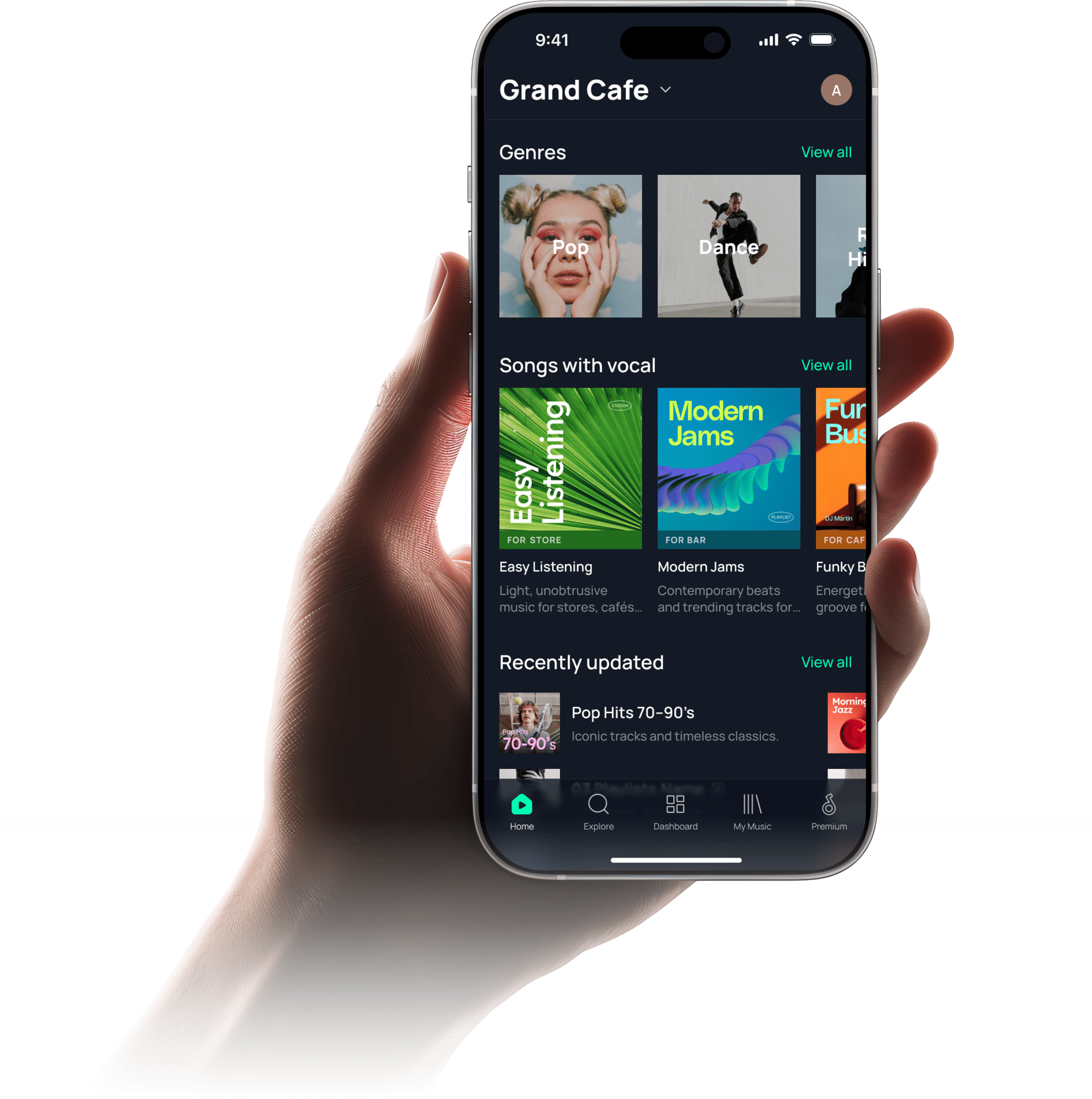
Frequently asked questions
Do I need a separate PPCA licence if I use OneMusic?
Your OneMusic agreement can include PPCA permissions for covered recordings and venue uses. Check your agreement if you use music in another way, such as operating an online radio station. Read the OneMusic licence terms.
What if my streaming service lets listeners pick a specific track?
PPCA says its internet radio licences exclude on-demand track selection. If you operate an on-demand music service, seek recording permissions from the relevant rights holders and check the underlying song rights separately. PPCA lists different arrangements for some other services, including subscription video on demand. Read PPCA’s digital licence descriptions.
Can a label license the recording directly if it works with PPCA?
Yes, if the label controls the rights you need in Australia. PPCA’s authority is non-exclusive. Ask for written terms that identify the recording, what you can do with it, where you can use it and for how long. Read PPCA’s label FAQ.
Does a recording’s copyright work the same way for every use?
Australian copyright law treats copying, playing a recording in public and communicating it to the public as distinct acts. Exceptions can depend on the act, so check the circumstances and the relevant licence. Read the Copyright Act 1968, section 85.
Australian music licensing resources
- What OneMusic Australia covers
- APRA AMCOS and rights in songs
- Australian business music licensing guide
- Explore the Moodby alternative
- Estimate OneMusic fees
- Australian Government guidance
- PPCA broadcast licensing
- APRA AMCOS on song and recording rights
Sources checked .