While You’re Not Thinking About Music, It’s Costing You Money
How background music affects revenue — and why most venues don’t know it.
- HUI Research’s real‑world test
- The first person to prove it
- Why tempo management doesn’t always work
- The classical music effect
- What 1.8 million orders revealed
- What guests themselves say
- Why this still isn’t working in most venues
- Actionable takeaway
- FAQ
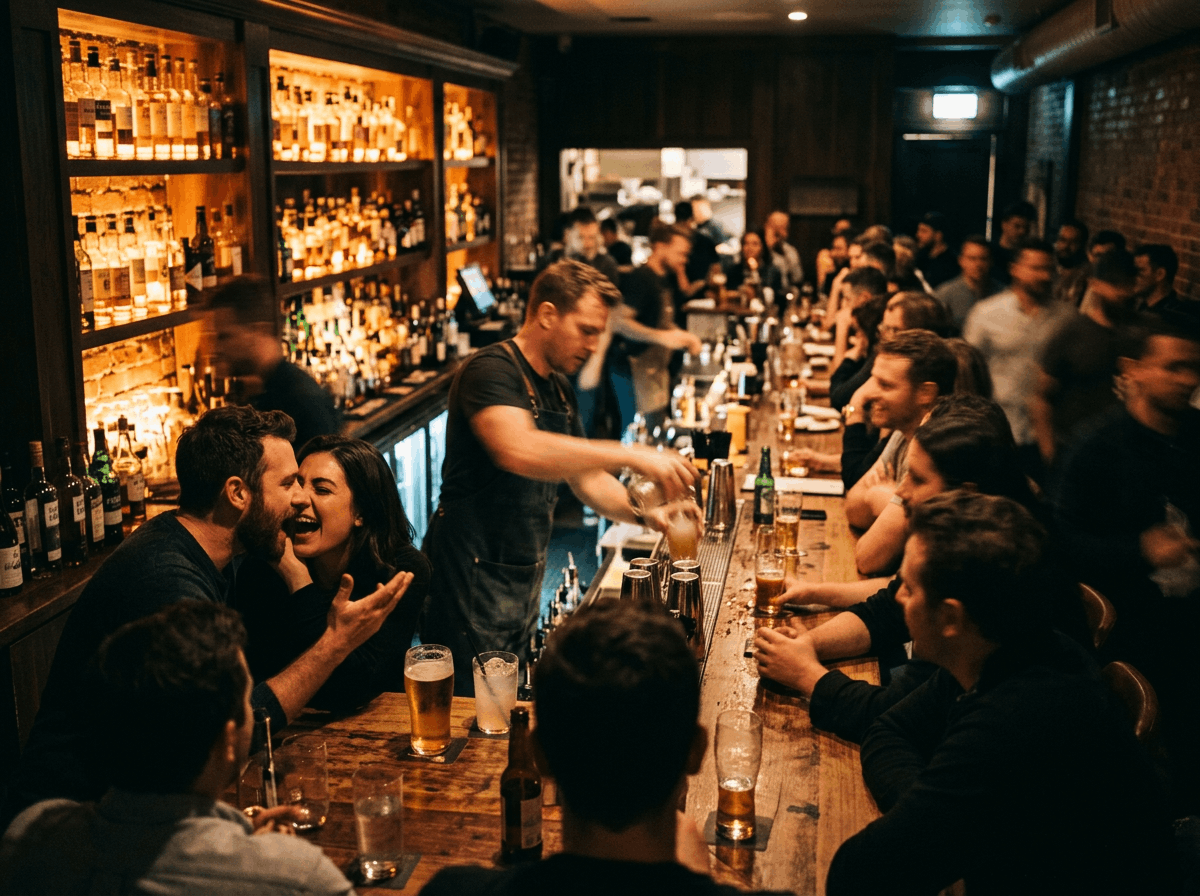
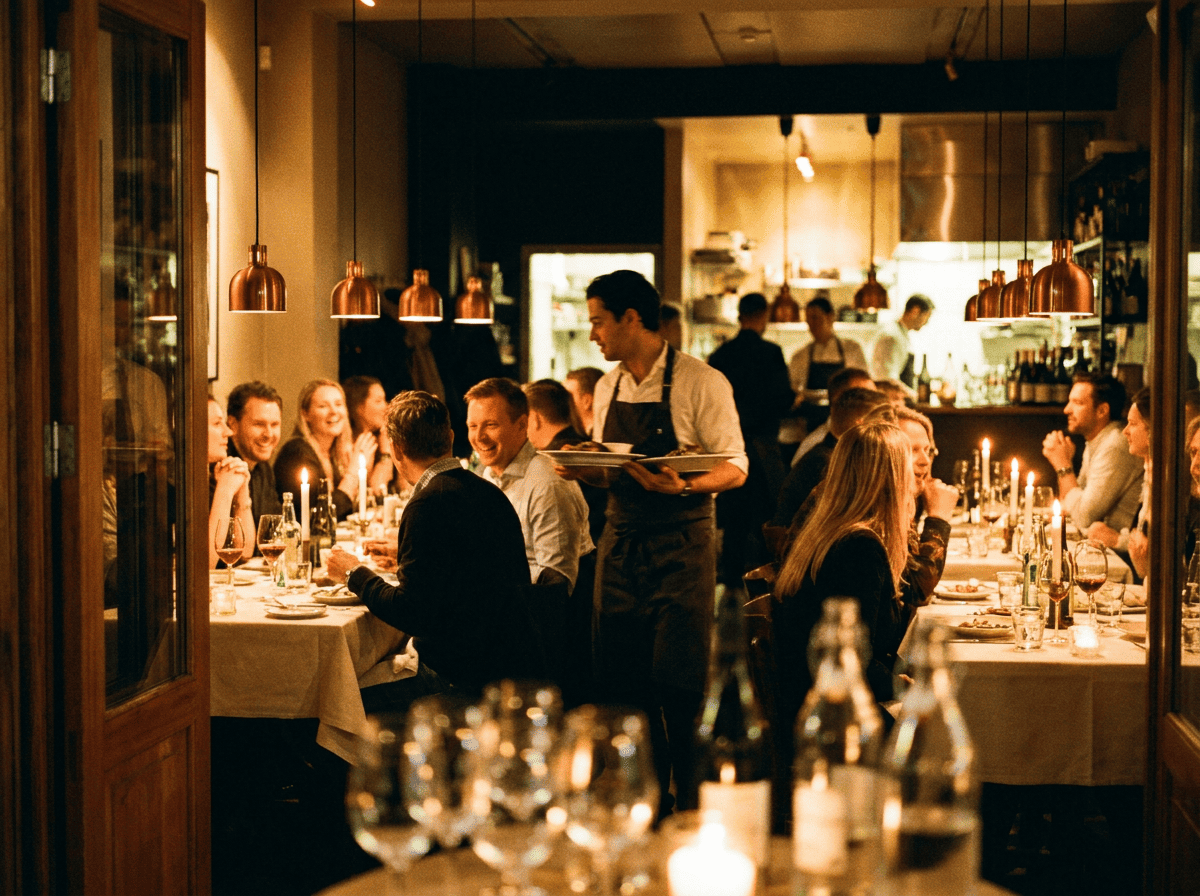
Picture a Friday evening. The restaurant is fully booked. The kitchen is buzzing, servers are rushing through the dining room. The manager sees the guests, feels the atmosphere, and mentally tallies the night’s revenue.
But he’s probably not really listening to the music. Or rather — he hears it, but doesn’t think about it. It’s just there, like something that takes care of itself. Someone on the staff put on a popular Spotify playlist, and everything seems fine.
The experiment the industry is still talking about
In 2017, Swedish research firm HUI Research conducted an experiment that the hospitality industry hasn’t stopped discussing. For twenty weeks, sixteen restaurants compared what happened to revenue when music was curated to match the venue’s concept — versus when it was chosen at random.
The difference was 9.1%.
After analyzing over 1.8 million transactions, the researchers concluded that well-matched music increases dessert sales by 15.6%, side dish sales by 11.1%, and beverage sales by 7.6%.
Music in the dining room isn’t decoration. It’s a functional variable that affects the bottom line. Yet most venue owners don’t manage it intentionally.
| +9.1% | +15.6% | +7.6% | 1.8M |
| revenue uplift | dessert sales | beverage sales | transactions analyzed |
The first person to prove it
Ronald Milliman was a marketing researcher bothered by one persistent question: everyone said music “creates atmosphere,” but no one could explain exactly how that translated into money.
In 1986, he ran a field experiment in an American restaurant. Over several weeks, the dining room alternated between slow music (no faster than 72 beats per minute) and fast music (no slower than 94 BPM). Neither staff nor guests knew about the experiment.
The results were unambiguous enough that Milliman published them in the Journal of Consumer Research — and the paper has been cited dozens of times a year ever since.
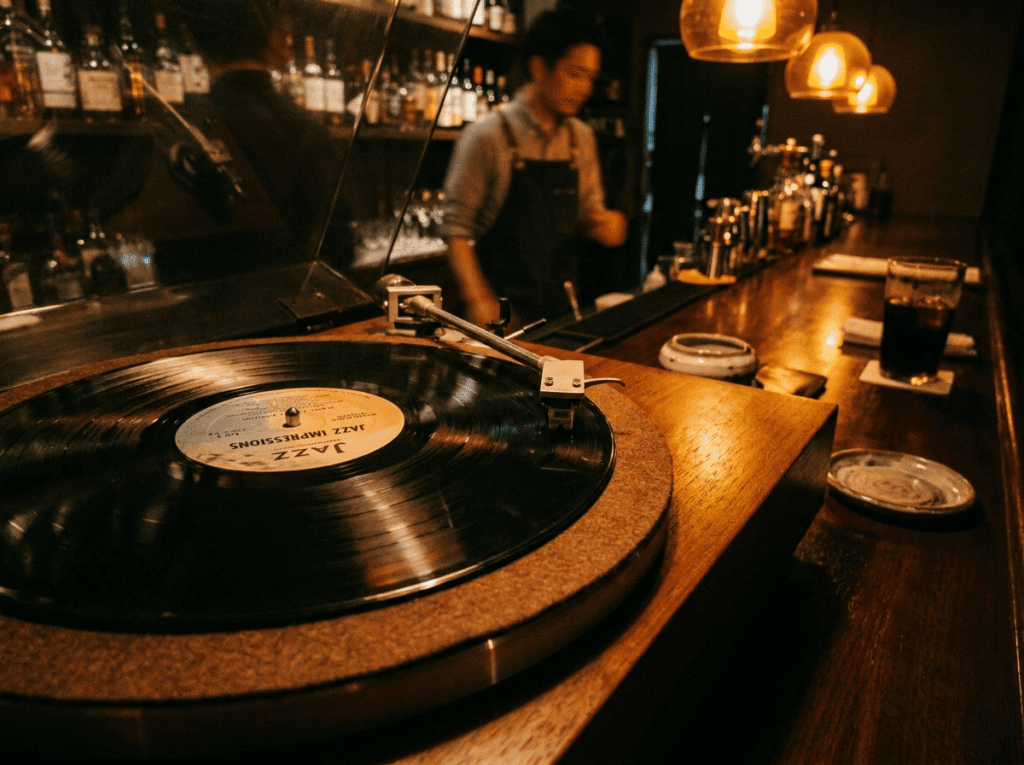
Slow music caused guests to stay noticeably longer. They also spent more — primarily on drinks. With fast music, they ate faster, left sooner, and freed up tables.
Milliman’s conclusion: music tempo is an operational variable. Like table layout or menu length — it can be tuned and managed.
In the morning at a coffee shop, you need to turn over as many guests as possible — switch to a faster tempo. On Friday evening, you want guests to linger and order a second glass of wine? Slow the atmosphere down.
Why tempo management doesn’t always work
Thirty-eight years after Milliman, researchers Malcman, Azar, and colleagues from Israel decided to test the same findings with more rigorous methodology. Their 2024 study is the largest field experiment on the subject to date: 282 tables at an Italian restaurant in Tel Aviv, data pulled directly from the POS system, three groups of guests — slow music, fast music, and a standard playlist.
Some findings aligned with Milliman’s. Slow music did keep guests seated longer: an average of 80 minutes versus 57. But the total bill amount didn’t differ significantly between groups. The one notable difference: servers in the “fast music” section received slightly higher tips.
The researchers didn’t so much rediscover America as refine the map. Slow music works where the sheer presence of the guest is itself valuable: it creates a sense of unhurried ease that converts into additional orders during quiet hours.
The problem with most venues isn’t that they choose the wrong tempo. The problem is that they rarely pay attention to context.
The classical music effect
In 2003, researchers Adrian North, Alastair Shilcock, and David Hargreaves conducted an experiment at a Leicestershire restaurant — an à la carte establishment with a high average check and a mature clientele.
Over eighteen evenings, the dining room alternated between classical music (Vivaldi, Handel, Strauss), popular hits of the time, and silence. The researchers tracked everything — starters, mains, coffee, alcohol, the final bill.
Classical music won across the board. Guests spent more — not on any single category, but consistently across all of them. Pop music and silence showed no meaningful difference from each other.
North offered an explanation that has since made its way into consumer psychology textbooks: music sends a signal about the status of the place. When classical music plays, guests unconsciously register: this is somewhere you can allow yourself a little more. It’s not manipulation — it’s the semiotics of space.
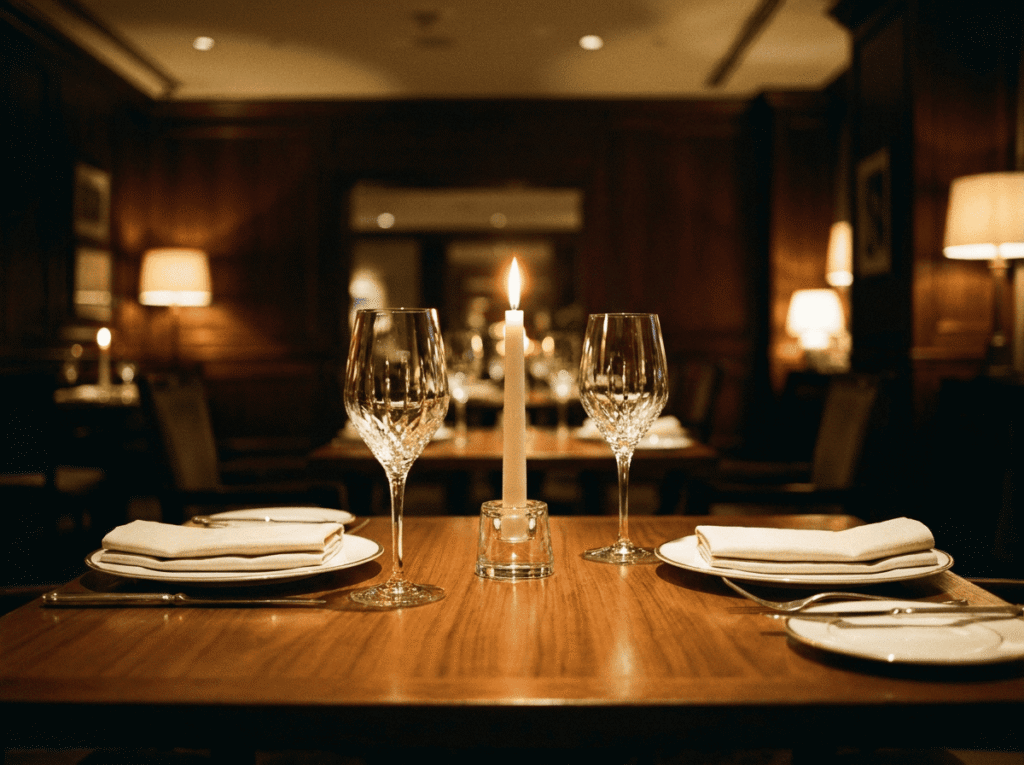
Interior, table settings, lighting, and sound together shape the expectations that guests then fulfill through their orders.
What 1.8 million orders revealed
Back to the 2017 Swedish study — the largest of its kind. Its authors introduced a concept that has since become standard across the industry: brand fit — the alignment between the music and the venue’s concept. And it was this alignment — not track quality or chart popularity — that proved to be the primary predictor of revenue growth.
Restaurants playing top-chart hits actually performed worse than those playing lesser-known music that was matched to the venue’s identity.
The researchers’ explanation: hit songs pull attention toward themselves. The guest starts listening — and stops being present at dinner. Well-matched music, by contrast, becomes part of the atmosphere without intruding.
What guests themselves say
In 2022–2023, BMI and the National Research Group conducted a large-scale survey of a thousand restaurant and bar visitors — ordinary people who go out to eat and drink.
The numbers are worth stating in full, because they say something many venue owners would rather not hear.
79% of respondents said they would stay longer if they liked the music playing at the venue. 58% said they would deliberately order something extra — just to keep listening. 53% admitted: if they don’t like the music, they’ll leave. Not complain to the manager. Just leave.
And one final figure that’s hard to dismiss: for millennials, music is the second most important factor when choosing a venue. After food. Ahead of interior design, price, and service.
This isn’t about background noise. It’s about a reason to come — and a reason to stay.

Why this still isn’t working in most venues
If the science of restaurant music has existed since the 1980s, if the data is compelling and reproducible — why do most cafés, restaurants, and bars still treat music as an afterthought?
First — music doesn’t hurt visibly. A bad meat supplier shows up immediately on the plate. Bad music works slowly: the guest leaves a little earlier, orders a little less, doesn’t come back — but never writes in a review “I didn’t like the tempo of the playlist.”
Second — the illusion of control. “We play what we like” or “what the staff likes” feels like a decision. But the owner’s musical taste and the venue’s musical DNA are different things. One of the bluntest conclusions from HUI Research: the music guests enjoy and the music that increases their spending often don’t overlap.
Third — the technical and legal barrier. Spotify isn’t built for business — legally (using a personal subscription for public playback infringes copyright and requires separate licensing) or functionally. It doesn’t allow you to manage multiple zones, set time-of-day schedules, or think about brand fit.
What to do with this knowledge
The research offers specific levers. Not “choose good music,” but precise, actionable settings:
Tempo — by time of day
Morning and lunch: 90–120 BPM if you need table turnover. Evening and weekends: 60–80 BPM if you want to hold the guest. This isn’t a rule — it’s a starting point. Your venue type will shape the exact parameters.
Genre — for the concept, not for taste
Ask yourself three questions: What price signal do you want to send to the guest? What behavior do you want to encourage (linger, try something new, relax)? Who is your guest at 8 PM on a Friday — and does that match who comes in at noon on a Wednesday? The music for those two moments probably needs to be different.
Volume — by zone
The waiting area and the main dining room may require different levels. The bar is a separate conversation entirely. Background level for conversational comfort in a restaurant is around 65–70 dB. Go higher and you start changing behavior.
Brand fit — not a one-time exercise
This isn’t a “set it and forget it” task. The playlist needs updating: seasonality, time of day, and audience all shift. HUI Research found that even well-matched music loses effectiveness if it isn’t refreshed.
One last thing worth saying
Music is the only atmospheric element in your venue that is present everywhere, always. Not just where the guest is looking — but wherever the guest simply is. Lights get switched off. Scents dissipate. Sound fills the space continuously.
And yet it’s the element that gets managed least intentionally.
The BMI study found that 82% of guests say the music in a venue tells them something important about the place. Not about the owner’s tastes. About the place itself — its character, its attention to detail, its understanding of why people come there.
The question worth asking yourself after reading this: what is your music saying right now?
For those ready to move from accidental choices to intentional ones: Moodby is a background music service for businesses with 300+ stations curated by venue type, genre, and time of day. All tracks are royalty-free — no licensing fees required.
FAQ
How does background music affect restaurant revenue?
Curated background music raises restaurant revenue by 9.1% on average. HUI Research and Soundtrack Your Brand established this in 2017 by analyzing 1.8 million transactions across 16 restaurants over 20 weeks. The uplift appeared across every category at once: desserts rose 15.6%, side dishes 11.1%, and beverages 7.6%.
Can the wrong music actually reduce restaurant sales?
Yes. HUI Research found that restaurants playing random top-chart hits performed worse than those playing lesser-known music matched to the venue’s identity. A familiar hit pulls a guest’s attention toward the song itself, and the guest stops being present at the table. The financial effect shows up as fewer orders and shorter visits.
What do guests actually say about music in restaurants?
In a 2022–2023 survey of a thousand restaurant and bar visitors by BMI and the National Research Group, 79% said they would stay longer when they liked the music, and 58% said they would order something extra just to keep listening. 53% said they would leave a venue if the music felt wrong, usually without telling anyone. For millennials, music ranked as the second most important factor in choosing a venue, after food.
Why don’t most restaurants manage their music deliberately?
Bad music works slowly and invisibly: a guest leaves a little earlier, orders a little less, and never mentions the playlist in a review. Owners also tend to play what they personally like, and HUI Research found that the music guests enjoy and the music that increases their spending often differ. So the soundtrack ends up set by whoever is on shift.
Why isn’t Spotify suitable for restaurant background music?
A personal Spotify subscription used for public playback infringes copyright and requires separate licensing. It also lacks the functional tools a venue needs: managing multiple zones, scheduling music by time of day, and aligning sound with the brand. These gaps are why dedicated background-music services exist.
What is brand fit in restaurant music?
Brand fit is the alignment between the music and a venue’s concept — its cuisine, price point, audience, and atmosphere. HUI Research identified it as the primary predictor of revenue growth, ahead of track quality or popularity. The test is simple: whether the music reinforces the feeling of the place or works against it.
Sources
- Milliman, R.E. (1986). The Influence of Background Music on the Behavior of Restaurant Patrons. Journal of Marketing Research.
- North, A.C., Shilcock, A., & Hargreaves, D.J. (2003). The Effect of Musical Style on Restaurant Customers’ Spending. Environment and Behavior.
- Wilson, S. (2003). The effect of music on perceived atmosphere and purchase intentions in a restaurant. Psychology of Music.
- Caldwell, C., & Hibbert, S.A. (2002). The Influence of Music Tempo and Musical Preference on Restaurant Patrons’ Behavior. Psychology & Marketing.
- Malcman, N., Azar, O.H., et al. (2024). How Does Background Music Affect Dining Duration, Tips and Bill Amounts in Restaurants? A Field Experiment. Journal of Retailing and Consumer Services.
- HUI Research & Soundtrack Your Brand (2017). The Impact of Music in Restaurants.
- BMI & National Research Group (2023). The Value of Music / Music Matters Study.
- Guéguen, N., et al. (2004). Sound Level of Background Music and Alcohol Consumption. Perceptual and Motor Skills.
- Guéguen, N., Jacob, C., et al. (2008). Sound Level of Environmental Music and Drinking Behavior: A Field Experiment With Beer Drinkers. Alcoholism: Clinical and Experimental Research.
- Jacob, C. (2006). Styles of background music and consumption in a bar: An empirical evaluation. International Journal of Hospitality Management.