The Ultimate Guide to Halloween Email Marketing: Data-Backed Strategies for Holiday ROI
- The Strategic Importance of Early Halloween Email Campaigns
- Dissecting the World’s Best Halloween Emails: What Actually Works
- Benchmarks for High-Converting Halloween Email Subject Lines
- Proprietary Framework: The “Inbox Mystery” Segment Model
- FAQ
With the final quarter of the year approaching, digital marketers face intense competition in the inbox. While autumn retail preparation involves inventory shifts and visual redesigns, the actual financial engine of the season lies within your automated messaging flows. Deploying a structured halloween email marketingstrategy is no longer a simple seasonal choice—it serves as a critical testing ground to optimize customer data, refine audience segments, and drive immediate conversions ahead of the massive Black Friday Cyber Monday (BFCM) shopping window.
This comprehensive guide breaks down the financial dynamics of autumn subscriber behavior, analyzes successful campaign mechanics from top global brands, and introduces original, proprietary strategic frameworks designed to maximize your halloween email engagement.
The Strategic Importance of Early Halloween Email Campaigns
Launching your seasonal email initiatives early provides a direct operational advantage. Consumer insights show that holiday shopping stretches across several weeks, meaning brands that establish inbox visibility in September capture extended revenue before consumer fatigue sets in.
The Financial Impact on the Inbox
The impact of autumn consumer spending on email metrics is clear. Modern retail benchmarks underscore the massive financial opportunities available through targeted digital communication:
- The Multi-Billion Dollar Digital Market: Total seasonal consumer spending continues to rise, with food, candy, and specialty retail purchases accounting for billions in online transactions, according to data on Mailjet.
- The Power of Reviews Over Price: According to recent market analysis shared by Klaviyo, authentic customer feedback and product reviews are more influential to a user’s first purchase than competitive pricing or steep discounts.
- Maximizing Lifespan ROI: Email remains the most cost-effective digital marketing channel for Q4 customer retention, yielding superior conversion rates when paired with personalized behavioral data.
Key Variables Driving Open and Click-Through Rates (CTR)
A successful seasonal email campaign relies on specific layout choices and technical frameworks rooted in digital consumer behavior:
- Striking Visual Identity: Modern holiday layouts leverage unique typography, custom animations, and distinct color pairings (such as dark mode backgrounds, bright oranges, and muted grays) to break inbox monotony, as cataloged in design indexes like Really Good Emails.
- The Psychology of the Mystery Offer: Introducing uncertainty into a call to action (CTA)—such as a “click to reveal your treat” button—substantially raises subscriber curiosity and drives strong click-through velocity.
- Contextual Relevance: Tailoring email copy to specific subscriber pain points (such as time-sensitive delivery guarantees for party essentials) lowers checkout hesitation.
Dissecting the World’s Best Halloween Emails: What Actually Works
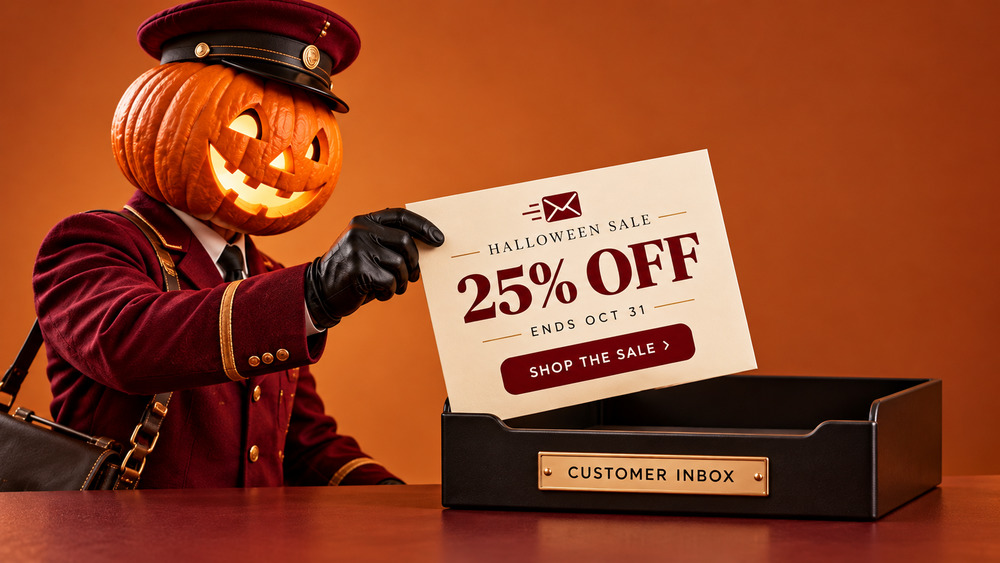
To convert creative concepts into measurable revenue, let us analyze the exact tactical frameworks used by leading brands to optimize their seasonal deliverability:
1. Social Proof as a Conversion Catalyst
Instead of opening your campaign with blanket discount pricing, leading brands use user-generated content (UGC) to build deep product authority. For instance, home decor and candle brand Happy Wax structured their autumn campaigns around highly specific customer reviews tailored directly to seasonal product benefits.
- The Tactical Lesson: Align your social proof directly with your target product’s seasonal context to build trust and set up stronger promotions ahead of peak Q4 traffic.
2. Multi-Tiered Urgency and Targeted BOGO Offers
Using a flat, sitewide discount code can train your high-value subscribers to wait for sales before purchasing. Baby sleepwear brand Woolino avoids this by launching targeted Buy One, Get One (BOGO) promotions paired with strict, single-day deadlines (“ends today”).
- The Tactical Lesson: A structured BOGO model encourages larger cart sizes from price-conscious buyers without eroding your brand equity among VIP customer segments.
3. Entertainment-Driven Brand Voice Testing
Seasonal events provide the perfect environment to test bolder, more distinct copywriting styles. Cereal brand Surreal built an entire text-heavy campaign around a fictional, deadpan “survival guide for a demon apocalypse,” weaving their product organically into the humor.
- The Tactical Lesson: High-quality storytelling breaks through inbox fatigue, keeping your brand top-of-mind and boosting landing page stay-time.
Benchmarks for High-Converting Halloween Email Subject Lines
Your subject line determines your campaign’s open rate. Below is an evaluation of proven copywriting formulas from top-performing retail and digital media campaigns:
| Subject Line Formula | Real-World Brand Example | Target Psychological Trigger | Best-Suited Audience Segment |
|---|---|---|---|
| The Creative Wordplay | Disney+: “Boo! See what’s screaming — er, streaming!” | Curated Amusement | Active Brand Advocates |
| The Direct Incentive | Woolino: “Boo! BOGO 30% off everything!!!” | Immediate Financial Value | At-Risk & Churn-Risk Buyers |
| The Curated Theme | Happy Wax: “Get Spooky with BLOOD MOON 🌝” | Curiosity & Social Proof | High-Value Frequent Purchasers |
| The Urgent Deadline | Changelly: “🎃 24H left to win some Halloween treats!” | Fear of Missing Out (FOMO) | Lapsed Seasonal Customers |
Proprietary Framework: The “Inbox Mystery” Segment Model
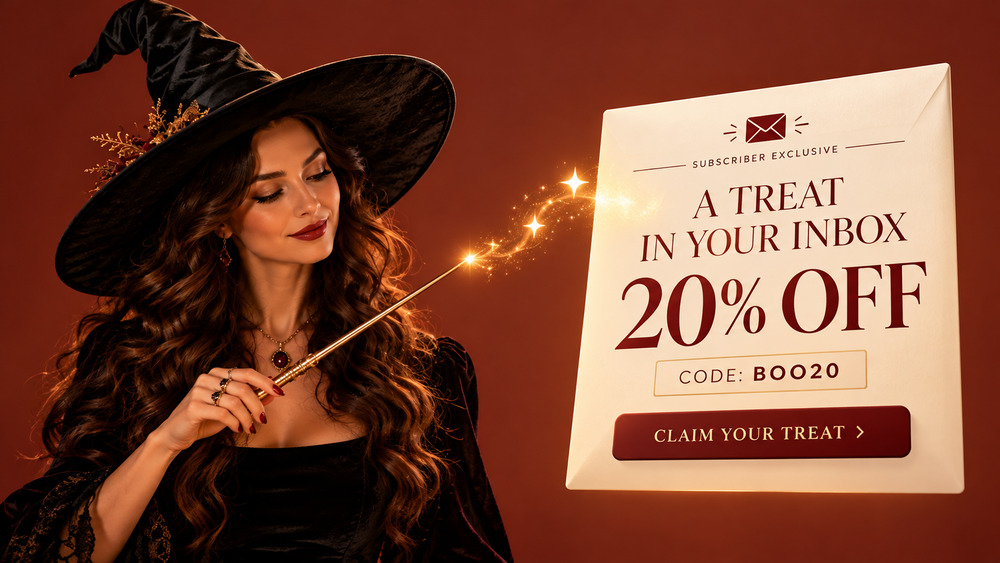
(Note: The following model represents original strategic concepts developed specifically for modern, data-driven email automation platforms).
To scale your halloween email marketing without alienating your subscriber base, marketing teams should split their list across the three distinct technical paths of the Inbox Mystery Framework:
1. RFM Analytics Tiering (Recency, Frequency, Monetary)
Avoid sending identical offers to your entire contact directory. Instead, use RFM analytics and predictive lifetime value (LTV) data to group your list:
- VIP/High-Value Customers: Send early-access, bundle-exclusive offers without an attached discount. These buyers value exclusive priority over lower pricing.
- Frequent, Value-Driven Buyers: Deploy multi-tiered BOGO offers to maximize total order volume.
- At-Risk/Lapsed Customers: Save your deep incentive codes and direct financial discounts specifically for this segment to safely win back their business.
2. Interactive Gamification & Audience Vibe Checks
Modern email design allows for complex interactive features that gather zero-party data. Designing a “Choose Your Own Adventure” interactive email layout allows subscribers to click different graphic choices within the message body. While this gamified structure dramatically lifts CTR, it serves a dual purpose: capturing direct, self-stated user preferences that let you build hyper-targeted segments for late-Q4 product pitches.
3. Acoustic Ambiance & Multi-Sensory In-Store UX
High-converting email marketing does not stop when a customer clicks “buy” or decides to visit your location. If your email campaign successfully drives foot traffic to your physical venue, your brick-and-mortar space must live up to that seasonal hype.
To maximize your offline conversion rates, you need to sync your digital messaging with your physical environment. By streaming the professionally curated Moodby Halloween Commercial Playlist directly inside your business, you instantly unlock a licensed, turnkey audio solution engineered to increase customer dwell time, boost impulse spending, and keep shoppers engaged the moment they step through your doors.
Frequently Asked Questions (FAQ)
How can a brand safely utilize automated AI tools for Halloween copy?
Automated tools are highly effective for rapid variation testing. Brands can prompt digital writing systems to adjust brand voice boundaries—such as creating an intentionally dry or kooky style for a specific customer segment. Always ensure your automated drafts are carefully checked for tone consistency before deployment.
What is the most effective method for reducing shopping cart abandonment during the autumn rush?
The most reliable solution is deploying an automated, real-time customer service agent or live interactive chat alongside your abandoned cart recovery emails. Quickly answering urgent shipping questions, sizing concerns, or delivery timelines directly prevents buyers from walking away at checkout.
How do custom product bundles drive superior holiday revenue compared to sitewide discounts?
Custom product bundles combine items that are frequently browsed or purchased together, presenting them as a single, curated package. This method elevates your Average Order Value (AOV) and rewards larger purchases without requiring you to lower margins across your entire individual catalog.
Why should email data tracking be optimized during the month of October?
October serves as the ideal live testing period for your primary winter campaigns. Evaluating how different subscriber groups react to specific subject line triggers, creative variations, and discount structures during October gives you a verified blueprint to maximize revenue during peak winter trading.