How Much Does It Cost to License a Song? The Commercial Music Guide
- The Legal Reality: Why Personal Streaming Fails in Business
- The Public Performance Provision
- The Cost of Non-Compliance: What the Data Shows
- Breaking Down the Costs: The “Big Three” PROs vs. Modern Alternatives
- The Competitive Breakdown: Annual Public Performance Licensing Costs
- Different Licenses for Different Intentions: PPL, Mechanical, and Sync
- Step-by-Step Guide: How to Calculate Your Potential Music Licensing Costs
- Commercial Streaming Services: The All-In-One Modern Alternative
- FAQ
Have you ever considered what happens when you press “play” on your personal Spotify account inside your retail store, café, or spa? While it seems like a harmless way to build a welcoming atmosphere, playing unlicensed music in a commercial environment is a direct violation of federal copyright law.
In the United States, music played in a public business is legally classified as a public performance. Because consumer streaming apps are strictly licensed for non-commercial, personal use, businesses must secure specific legal permissions.
So, how much does it cost to license a song for commercial use?
The short answer: it varies wildly. For standard background music, public performance licenses from Performing Rights Organizations (PROs) typically range from $250 to $2,000 per year per location. However, if you want to use a famous track in a commercial advertisement or a video, a synchronization license can easily jump from $500 to over $50,000.
This comprehensive guide breaks down the true costs of music licensing, explores the steep legal penalties for non-compliance, and highlights how commercial streaming services can save your business thousands of dollars.
The Legal Reality: Why Personal Streaming Fails in Business
Many small business owners assume that paying a monthly consumer subscription to Apple Music, Spotify, or Amazon Prime Music grants them the right to play that music anywhere. This misconception can lead to catastrophic financial consequences.
The Public Performance Provision
According to the federal statutes overseen by the U.S. Copyright Office, creators hold exclusive rights to the public performance of their works. A public performance is defined as any rendition of a song outside a normal circle of a family and its social acquaintances. When a song plays over your business speakers, it is instantly categorized as a public performance, requiring a Public Performance License (PPL).
The Cost of Non-Compliance: What the Data Shows
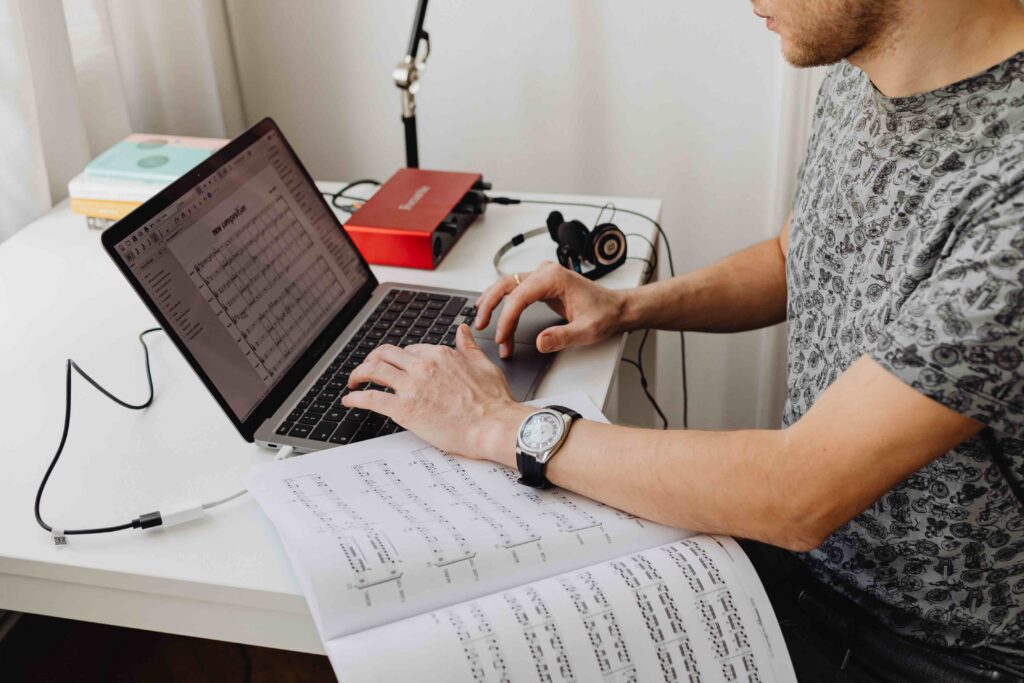
Performing Rights Organizations (PROs) actively employ field representatives to audit businesses, from local coffee shops to massive nightclubs. If you are caught playing copyrighted music without the proper PPL, the fines are severe.
Statutory damages under U.S. copyright law range from $750 to $30,000 per song violation. If a court proves that the copyright infringement was committed willfully(meaning you knew the law or ignored warning letters), those penalties can skyrocket up to $150,000 per song.
The financial risks of ignoring these laws are heavily documented in industry studies:
- The Nielsen Music Study: A comprehensive industry study by Nielsen Musicrevealed that 83% of small business owners illegally use personal music accounts (like personal Spotify or Apple Music tiers) to stream music in their commercial spaces, leaving millions of businesses exposed to legal liability.
- The Phorest Salon Software Report: According to independent business operational audits tracked in compliance overviews by Consumer Reports, over 60% of small business owners who received warning letters from copyright enforcement entities admitted they did not understand the distinction between consumer and commercial streaming.
- Real-World Precedents: A notable independent venue lawsuit documented by Digital Music News saw a small local business hit with thousands in unpaid fees, back-charges, and legal penalties after ignoring standard warning letters from PRO representatives. One venue owner in Mississippi was sued for failing to pay standard licensing fees, racking up over $6,850 in immediate penalties and attorneys’ fees, illustrating that PROs actively enforce these regulations against small operators.
Breaking Down the Costs: The “Big Three” PROs vs. Modern Alternatives
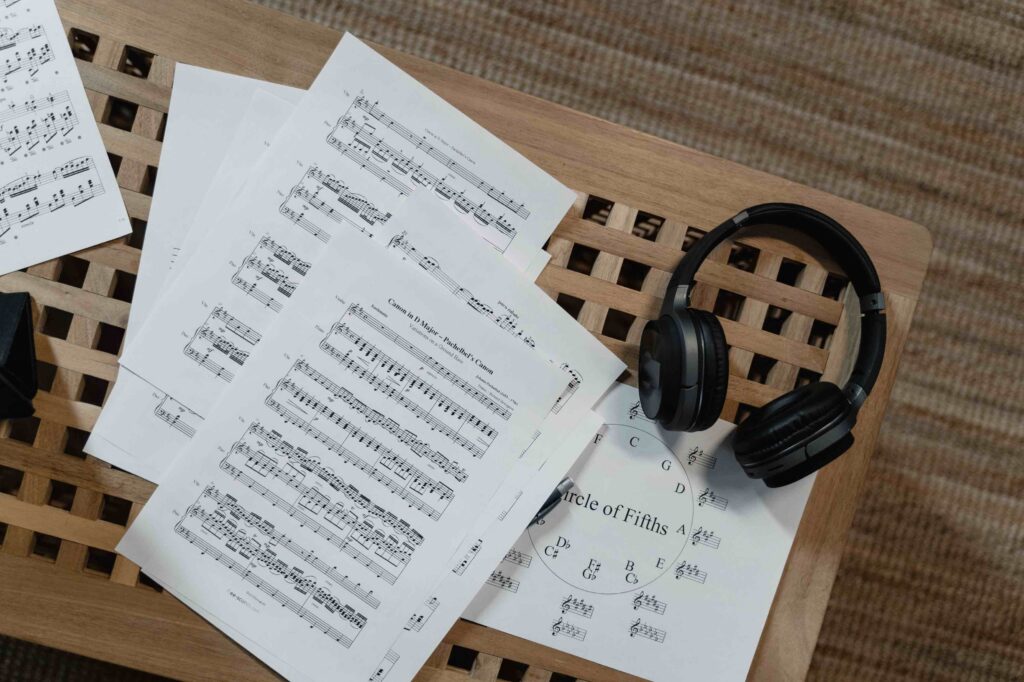
To legally play a diverse catalog of music via traditional methods, businesses must purchase licenses directly from the primary Performing Rights Organizations that represent songwriters and publishers. Because artists belong to different PROs, you generally need to buy licenses from multiple organizations to avoid accidental infringement.
1. ASCAP (American Society of Composers, Authors and Publishers)
As the oldest PRO in the United States, ASCAP protects a massive catalog of over 19 million songs for nearly a million members.
- Average Annual Cost: $350 to $4,500+ per location.
- Pricing Factors: ASCAP bases its rates on your business industry, total square footage, how many speakers you utilize, and whether the music is purely background or paired with visual elements.
2. BMI (Broadcast Music, Inc.)
BMI is the largest PRO in the nation, representing more than 1.4 million songwriters and an expansive catalog exceeding 22.4 million tracks.
- Average Annual Cost: $300 to $14,000+ per location.
- Pricing Factors: According to SoundMachine’s industry price analysis, BMI requires business owners to submit facility measurements and industry types. Large hospitality venues, casinos, or multi-zone retail chains frequently face rates at the higher end of the spectrum.
3. SESAC
Unlike ASCAP and BMI, which operate as non-profit entities, SESAC is a boutique, invitation-only, for-profit PRO. It represents highly profitable, iconic catalogs across diverse genres.
- Average Annual Cost: $350 to $2,000+ per location.
- Pricing Factors: Data published by Royalty Exchange indicates that SESAC relies heavily on business classification and physical size to determine custom yearly rates, averaging around $700 annually for standard small-scale environments.
The Competitive Breakdown: Annual Public Performance Licensing Costs
| Licensing Provider | Entry-Level Annual Cost | High-End / Enterprise Annual Cost | Pricing Structure Basis |
|---|---|---|---|
| ASCAP | $350 | $4,500+ | Square footage, guest capacity, speaker count |
| BMI | $300 | $14,000+ | Industry category, listener reach, venue type |
| SESAC | $350 | $2,000+ | Specialized business tiering, venue size |
| Moodby Subscription | ~$350 (29.25 zł/mo / ~$8.50/mo) | ~$470 (39 zł/mo / ~$11.00/mo) | Flat monthly/annual subscription per active zone |
Different Licenses for Different Intentions: PPL, Mechanical, and Sync
The phrase “license a song” means different things depending on how your business plans to use the audio. Selecting the incorrect license can leave your business legally vulnerable.
Public Performance License (PPL)
- What it does: Allows the playback of recorded music in a public space.
- Who needs it: Restaurants, bars, retail stores, gyms, medical offices, and salons.
- Cost: $250 to $2,000+ annually per location.
Mechanical License
- What it does: Grants the right to reproduce a copyrighted song onto a physical or digital medium, or to record a “cover” version of someone else’s composition.
- Who needs it: As outlined in the Songtrust Global Pay Sources Guide, any business that wants to record a custom promotional compilation album or produce physical merchandise featuring recorded audio needs a mechanical license. These parameters are tightly governed by the compliance directives of The Mechanical Licensing Collective (The MLC).
- Cost: Set by statutory rates overseen by The MLC (currently measured in cents per stream or physical track reproduction).
Synchronization License (Sync)
- What it does: Authorizes a business to sync a copyrighted song to a moving visual image, such as a video file.
- Who needs it: Any business creating a promotional YouTube video, a social media advertisement (TikTok/Instagram), a television commercial, or a corporate presentation.
- Cost: $500 to $50,000+. Comprehensive legal tracking by Music Services Inc.shows that major pop hits from elite artists consistently command five-to-six-figure fees for commercial sync rights, making them heavily budget-restricted for smaller operations.
Step-by-Step Guide: How to Calculate Your Potential Music Licensing Costs
If you choose to bypass commercial streaming platforms and build direct relationships with individual PROs, you must follow a methodical verification process to project your annual expenses:
- Classify Your Exact Business Type: PROs segment businesses into strict categories (e.g., “Bowling Center,” “Campground,” “Dance School,” “Full-Service Restaurant”). Each category features an independent rate matrix.
- Calculate Total Audio Coverage Area: Use a tape measure or review architectural blueprints to determine the exact square footage of the zones where music will actively play. Larger spaces require higher licensing fees.
- Audit the Audio Delivery System: Count your total number of mounted speakers, amplifiers, and output zones. Exceeding specific thresholds (such as the standard threshold of six speakers) can push your business into premium fee brackets.
- Estimate Daily/Weekly Customer Volume: Document your average audience footprint. Higher-occupancy venues inherently pay elevated rates due to their expanded commercial reach.
- Identify the Target Songwriters: If you intend to play specific subsets of artists, consult online PRO databases to discover exactly which entity holds the copyright.
- Initiate Direct Negotiations: Contact customer service representatives at ASCAP, BMI, and SESAC. Be prepared to negotiate multi-year agreements or multi-location discounts to lower your upfront outlays.
Commercial Streaming Services: The All-In-One Modern Alternative
Navigating individual contracts with ASCAP, BMI, and SESAC is historically complex, time-consuming, and highly restrictive for independent entrepreneurs. Fortunately, modern business streaming solutions offer an easier pathway.
By utilizing a dedicated, commercial-ready platform like Moodby, you completely eliminate the logistical nightmare of dealing with individual PRO registration forms, audit requests, or unexpected fee shifts. Moodby provides a seamless catalog specifically cleared for commercial use, offering business owners straightforward legal compliance across all locations and listening zones.
Instead of spending thousands of dollars dynamically calculated against variable metrics like venue size or speaker numbers, Moodby offers fixed, highly accessible tiers with no hidden add-ons. Subscribing to Moodby unlocks over 350 curated, brand-aligned stations designed specifically for environments like cozy cafés, hotels, high-energy bars, and retail spaces. Additionally, the system provides integrated enterprise features—such as multi-location control dashboards, smart staff access limitations, mobile playback settings, and localized in-store audio messaging inserts—to maintain complete consistency over your brand atmosphere without daily micromanagement.
Frequently Asked Questions About Commercial Music Licensing
1. Can I use a standard personal Spotify or Apple Music account if I own a small business?
No. The terms of service for personal streaming applications explicitly prohibit commercial use. Utilizing a consumer account to broadcast audio in a public business constitutes copyright infringement and exposes your brand to heavy statutory fines under the authority of the U.S. Copyright Office.
2. What happens if different technicians or zones in my business want different music?
If you broadcast distinct audio feeds across multiple zones or physical locations, you must ensure that every single stream is fully covered by a public performance license. Commercial platforms like Moodby allow you to scale your account to manage multiple zones and locations from a centralized dashboard.
3. Are public domain or Creative Commons tracks free to use in a business?
Songs in the public domain (typically works published before 1929) are free from copyright restrictions. However, modern recordings of those public domain songs may still be copyrighted by the orchestra or studio that recorded them. Creative Commons tracks can be used for free only if the artist has explicitly designated the track for commercial playback without royalty requirements.
4. How much does a synchronization license cost for a local social media ad?
While background PPL fees are highly standardized, sync licensing costs are entirely open to negotiation. A localized social media ad using an indie artist’s track might cost a few hundred dollars. In contrast, sync rights for a globally recognized pop track will easily scale into tens of thousands of dollars.
5. Do music licensing rules change during major holiday seasons?
The core legal requirements remain identical year-round. However, if your business hosts special ticketed holiday events, live performances, or seasonal festivals, individual registries like ASCAP or BMI require distinct event-specific permits that are priced separately from your standard annual background music agreement.